The safest way to clean a The North Face backpack is to use the least amount of water that solves the problem. The North Face recommends spot cleaning with a damp cloth and air drying rather than fully submerging the pack.
Empty every pocket, brush off loose dirt, and gently wipe dirty areas. Use a tiny amount of mild, non-bleach soap only when water is not enough. Wipe away soap residue and let the backpack dry completely.
Do not use bleach, a clothes dryer, an iron, or a washing machine unless the sewn-in care label for your exact model specifically permits it.
Can You Wash a The North Face Backpack?
You can clean a The North Face backpack, but “washing” should usually mean careful spot cleaning—not a washing machine cycle or full soak.
The North Face’s general guidance is to spot clean with a damp cloth and air dry. Because materials and construction vary, check the care label for your exact model before using more water.
Most backpacks are water-resistant, not waterproof. Cleaning can remove dirt without making the pack fully waterproof.
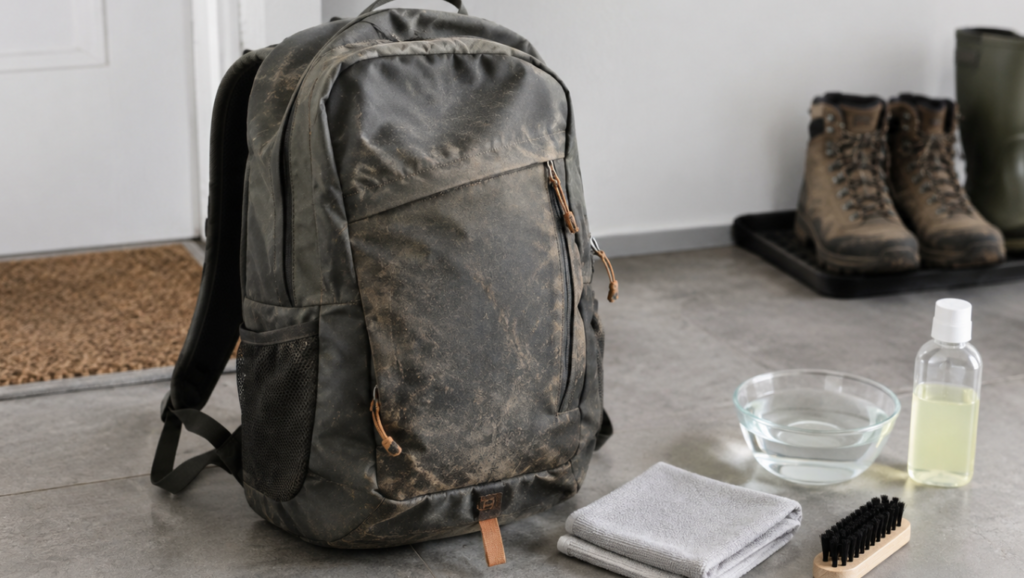
Is a full soak ever appropriate?
A sink or bathtub soak is not the default method. Water can become trapped in padded straps, back panels, lining, and pockets, making the backpack slow to dry and more likely to smell musty.
Only consider a more extensive hand-cleaning method if the care instructions for your exact model allow it. A pillowcase or delicate wash cycle does not automatically make machine washing safe.
What You Need to Clean the Backpack
- Microfiber cloth or soft sponge
- Soft-bristled brush or clean toothbrush
- Cool or lukewarm water
- Small amount of mild, non-bleach soap
- Clean towel
- Ventilated drying area
- Fan, if needed
Test any soap solution on a hidden area first. Stop if the color, texture, or finish changes. A compatible technical-gear cleaner is optional, but check its instructions before use.
How to Clean a The North Face Backpack Step by Step
- Empty every compartment. Remove food, clothing, electronics, bottles, and removable accessories.
- Shake out debris. Turn the bag upside down. Use a vacuum with a soft attachment for crumbs or sand if available.
- Check the care label. Look for model-specific instructions and special materials.
- Brush off dry dirt. Use a soft brush on the exterior, seams, bottom, and pockets.
- Start with water. Dampen and wring out a cloth until it is damp, not dripping.
- Spot clean gently. Wipe from the outside of a stain toward its center.
- Add minimal soap if necessary. Put the soap solution on the cloth, never pour it directly onto the backpack.
- Clean high-sweat areas. Focus on shoulder straps, the back panel, waistbelt, grab handle, and pocket openings.
- Remove residue. Wipe repeatedly with a separate cloth dampened with clean water.
- Air dry completely. Open all zippers and pockets and place the backpack in a shaded, ventilated area.
Do not store the pack until its lining, padding, seams, bottom, and hidden pockets are dry.
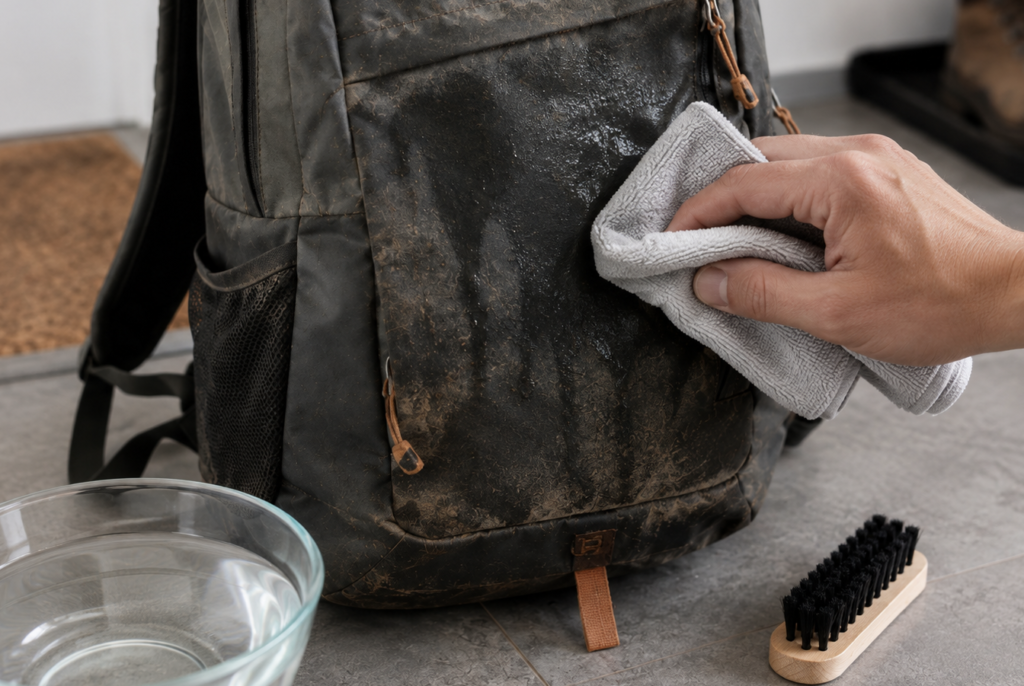
How to Remove Mud From a The North Face Backpack
Choose the method based on whether the mud is wet or dry.
For fresh, wet mud
- Remove gear from the affected pocket.
- Blot excess moisture with a towel.
- Avoid hard rubbing, which can push mud into fabric or mesh.
- Wipe with a clean, damp cloth.
- Use a tiny amount of mild soap if a mark remains.
- Wipe with clean water and leave the pocket open to dry.
For dried, caked mud
- Let thick mud dry until it becomes crumbly.
- Brush it away with a soft brush.
- Shake out or vacuum loose grit.
- Wipe remaining discoloration with a damp cloth.
- Remove residue and air dry.
Do not scrape coated fabric or use a stiff brush on mesh.
How to Remove Sweat and Odor From Backpack Straps
Sweat and body oils collect on shoulder straps, the back panel, waistbelt, and grab handle.
Wipe these areas with a damp cloth. If the odor remains, use a trace of mild soap, gently work the cloth into the padding, and wipe several times with clean water. Air dry with every compartment open.
Do not use perfume or deodorizer to cover the smell. These products may leave residue and attract dirt. Repeat the gentle cleaning after the pack is fully dry if necessary.
How to Clean a Backpack While Hiking
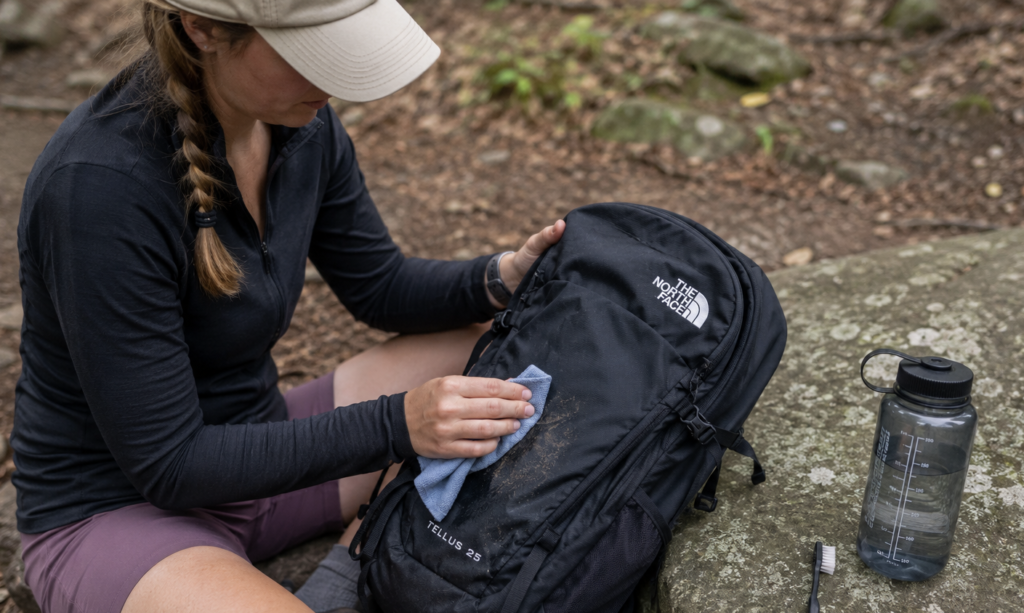
You can clean small spills, sweat, and trail dirt at camp without soaking the entire pack.
Carry:
- Small microfiber cloth
- Soft toothbrush
- Leakproof container with a little mild soap
- Water bottle
- Zip-top bag for used cloths
Then:
- Remove food or gear from the affected pocket.
- Blot liquid spills.
- Brush away dry dirt or mud.
- Wipe with a damp cloth.
- Use minimal soap only if needed.
- Wipe again with clean water.
- Towel-dry the area and leave the pocket open.
- Keep wet items outside the main compartment until dry.
Local cleaning uses less water and reduces trapped moisture during a trip.
How to Clean the Inside of the Backpack
Empty and shake out the backpack. Vacuum crumbs, sand, and lint if possible. Blot sticky spills before wiping the lining with a well-wrung damp cloth.
Use a tiny amount of mild soap only when needed, then wipe with clean water. Keep laptop sleeves and electronics dry, and leave all compartments open while drying.
For food, milk, or juice odors, repeat spot cleaning after the lining is completely dry instead of using fragrance spray.
How to Clean Zippers, Mesh, and Buckles
Brush zipper teeth, seams, and buckle edges gently with a soft toothbrush. For a gritty zipper:
- Brush away dry debris.
- Wipe with a damp cloth.
- Open and close it slowly.
- Wipe away loosened dirt and moisture.
Do not force a jammed zipper or apply household oil without checking product guidance. Oil can attract grit. Clean mesh with a soft cloth or brush; avoid abrasive sponges and sharp tools.
How to Dry and Store a The North Face Backpack
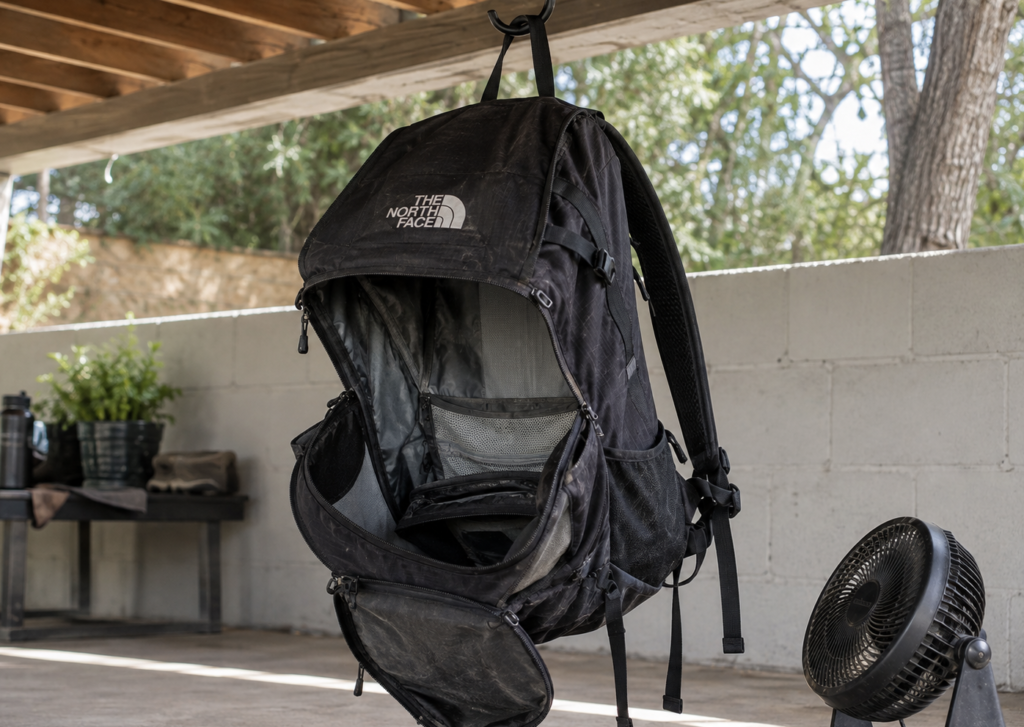
Open every pocket and zipper. Hang the backpack upside down or position its openings downward in a shaded, well-ventilated place. A nearby fan can improve airflow.
Keep the pack away from heaters, radiators, fireplaces, hair dryers, clothes dryers, and prolonged strong sunlight. Check the padding, lining, bottom, and seams before storing.
Store the backpack empty or lightly stuffed in a cool, dry place. Keep wet rain covers, towels, shoes, and hydration reservoirs separate.
What Not to Use on a The North Face Backpack
Unless the exact care label says otherwise, avoid:
- Chlorine or oxygen bleach
- Fabric softener
- Strong stain removers
- Solvents, acetone, or degreasers
- Household disinfectant sprays
- Abrasive sponges
- Very hot water
- Washing machines
- Clothes dryers or direct heat
- Irons
- Dishwashers
- Routine full submersion
The North Face specifically warns against bleach and ironing. Improper care may also affect warranty coverage.
Should You Waterproof the Backpack After Cleaning?
Cleaning does not make a backpack waterproof. For hiking in prolonged rain, use a pack liner, dry bags, or a compatible rain cover.
If the pack no longer beads light moisture, clean and dry it first. Then check the care label before applying a technical-gear water-repellent treatment. An unsuitable product can change the fabric’s feel or performance.
When Cleaning May Not Fix the Problem
| Problem | Safer first step | Avoid |
|---|---|---|
| Fresh mud | Blot and wipe with clean water | Hard scrubbing |
| Dried mud | Brush or vacuum first | Scraping coated fabric |
| Sweat or salt | Damp cloth and mild soap | Bleach |
| Food or juice | Blot, spot clean, remove residue | Saturating the pack |
| Oil or sunscreen | Test mild soap solution on a hidden area | Solvents and degreasers |
| Musty odor | Clean contact areas and dry completely | Sealing the pack damp |
| Visible mold | Isolate the pack and seek advice | Brushing mold indoors |
| Peeling coating | Stop aggressive cleaning | Heavy soaking |
| Damaged straps or buckles | Contact the manufacturer or assess replacement | Expecting washing to repair it |
Cleaning will not restore peeling coatings, torn straps, or damaged buckles. Persistent mold, chemical contamination, or affected padding may require professional assessment or replacement.
Cleaning Method Comparison
| Cleaning method | Best use | Main risk | Recommendation |
|---|---|---|---|
| Dry brushing | Dust and dried mud | Damage to mesh from force | Recommended |
| Damp cloth with water | Light soil and fresh marks | May not remove oils | First choice |
| Damp cloth with mild soap | Sweat, food, sunscreen, grime | Soap residue | Use carefully |
| Soft toothbrush | Zippers, seams, buckles | Fraying mesh | Use gently |
| Full bathtub soak | Only if the care label allows it | Trapped moisture | Not a default |
| Washing machine | Only if the care label allows it | Stress on straps and coatings | Generally avoid |
| Dryer or direct heat | None for a typical pack | Fabric or coating damage | Avoid |
| Technical-gear cleaner | Compatible technical fabrics | Compatibility varies | Optional |
| Waterproofing treatment | Reduced water repellency | Incorrect treatment | Model-specific |
How Often Should You Clean a The North Face Backpack?
Clean the pack when its condition calls for it:
- After muddy hikes: Brush off dirt and wipe affected areas.
- After sweaty hikes: Clean the straps or back panel if they smell or feel salty.
- During regular school use: Empty it often and clean weekly or after spills.
- After food or drink spills: Spot clean as soon as practical.
- Before storage: Empty and dry it completely.
Light, regular cleaning is gentler than waiting for heavy buildup.
Frequently Asked Questions
Can you wash a The North Face backpack in the washing machine?
Generally, no. The North Face recommends spot cleaning with a damp cloth and air drying. Check the sewn-in care label for your exact model before considering machine washing.
Can you soak a The North Face backpack in a bathtub?
Not as a routine method. The North Face advises against fully submerging its backpacks unless the instructions for your specific model clearly allow it.
What soap can you use on a The North Face backpack?
Use a small amount of mild, non-bleach soap or a compatible technical-gear cleaner. Apply it to a damp cloth and wipe away residue with clean water.
How do you remove dried mud from a The North Face backpack?
Let thick mud dry until crumbly, brush or vacuum it away, and spot clean the remaining mark with a damp cloth. Do not scrape coated fabric.
How do you remove sweat smell from backpack straps?
Wipe the straps, back panel, and waistbelt with a damp cloth. Add minimal mild soap if necessary, remove all residue, and air dry completely.
Can you use bleach on a The North Face backpack?
No. The North Face warns that bleach can damage its backpacks.
Can you put a The North Face backpack in the dryer?
No. Air dry it in a shaded, ventilated area and avoid direct heat.
Can you clean a The North Face backpack while hiking?
Yes. Brush away dry dirt, wipe small affected areas with a damp cloth, use minimal soap if needed, and keep pockets open to ventilate.
How do you clean the inside of a The North Face backpack?
Empty and shake out the pack, vacuum loose debris if possible, then wipe the lining with a well-wrung damp cloth. Keep laptop compartments and electronics dry.
Can you clean a hydration bladder inside the backpack?
Remove the reservoir and clean it separately according to its manufacturer’s instructions. Dry the reservoir, tube, bite valve, and removable parts completely before storage.
What if the inside coating is peeling?
Cleaning will not reverse peeling. Avoid aggressive washing and contact the manufacturer or consider replacement if the damage affects the pack’s function.
Can cleaning make a The North Face backpack waterproof?
No. Use dry bags, a pack liner, or a compatible rain cover to protect important contents during prolonged rain.